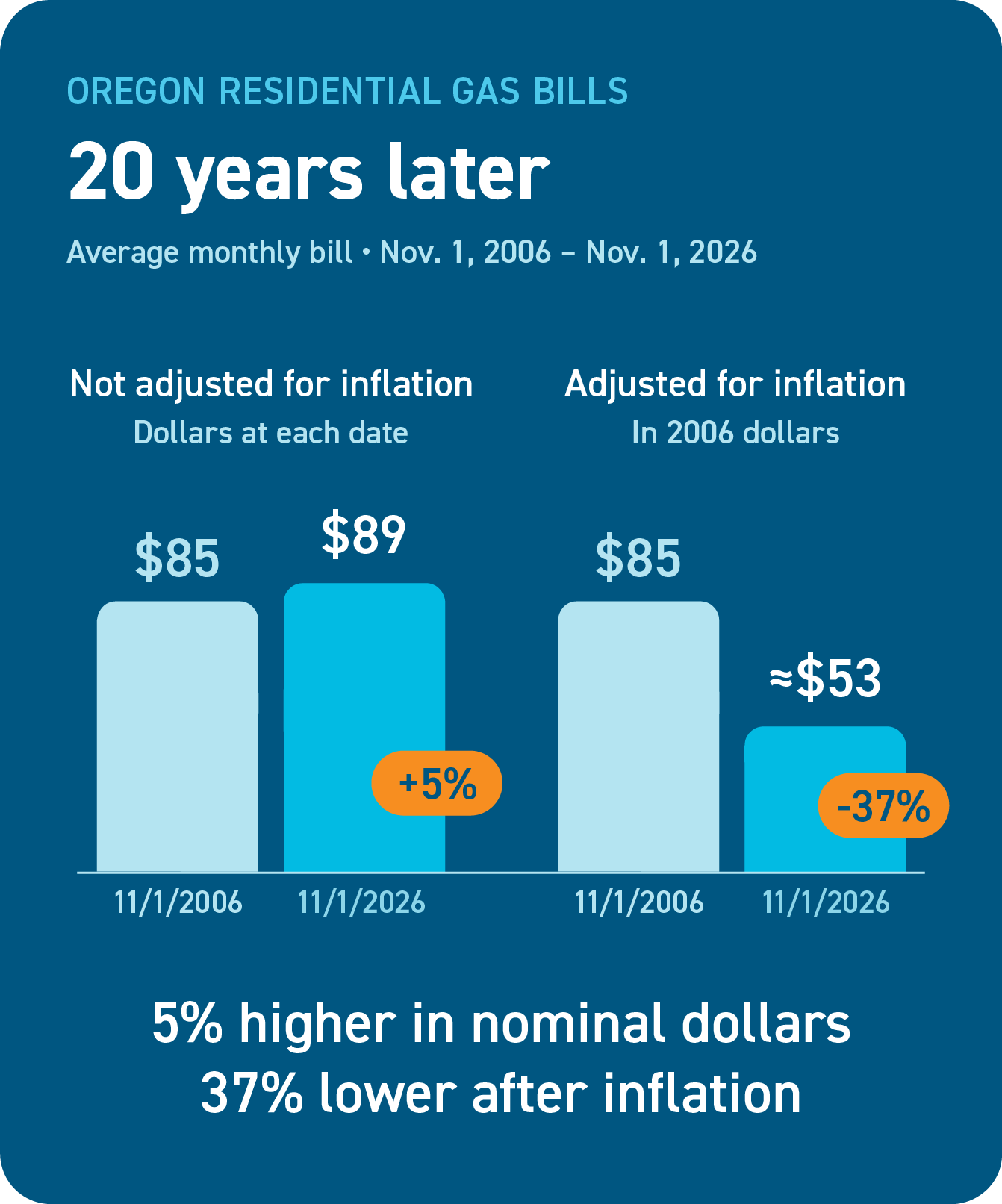
Today, customers pay about the same amount for their natural gas service as in 2006
On November 24, 2026, NW Natural asked the Oregon Public Utility Commission (OPUC) to approve its first general rate increase in two years. If approved, this adjustment would not be effective until October 31, 2027.
This request will not impact customer bills this winter season (2026-2027)
The request reflects rising costs over the last two years of providing safe, reliable natural gas service. The requested increase is primarily driven by inflation, higher costs for materials and services, and the rising expense of operating and maintaining critical infrastructure.
How much will my gas bill change next year?
If the current request is approved as filed:- The average residential customer using 53 therms will see an increase of about 8.8%, or approximately $8.01 per month
- The average small-commercial customer using 263 therms will see an increase of about 8.3%, or approximately $31.74 per month
- The average large-commercial customer using 2,898 therms will see an increase of about 5.6%, or approximately $168.68 per month
The OPUC will carefully review the request, which includes facts, analysis and data to support this filing. The final approved amount may differ from what was filed.
If you need assistance with paying your bill, please visit here to learn about available programs and ways we can support you.
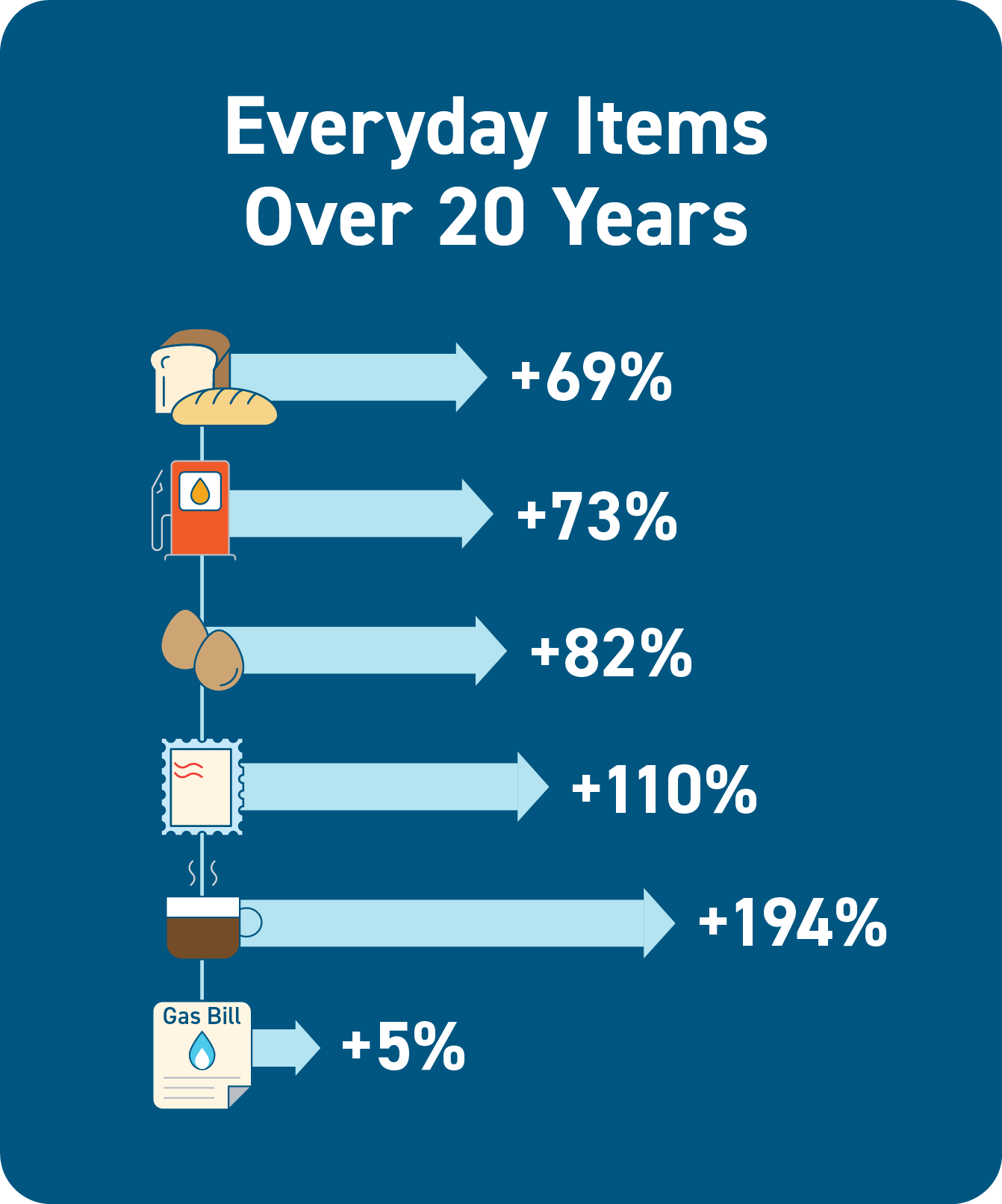
While we know any increase can be difficult, Oregon residential natural gas bills remain affordable by historical standards and compared to other household items.
How is NW Natural working to keep bills affordable?
How is NW Natural working to keep bills affordable?
- Purchasing natural gas strategically to reduce the impact of market volatility
- Using energy storage that provides customers with millions of dollars in annual bill credits
- Promoting energy-efficiency programs to lower energy use and bills
- Improving productivity in our operations to do more with the staff we have to best mitigate rising costs in other areas
Learn more about ways we work to keep bills down.
For every dollar of your gas bill...
Here is a breakdown of how each dollar of your bill is spent:

What are the reasons for this request?
What are the reasons for this request?
Many factors are causing costs to rise that are not within NW Natural’s control. General inflation has risen significantly, but costs from Cities and related to gas construction have risen even faster.
External costs impacting rates
Three examples of costs NW Natural does not control, but are impacting rates*
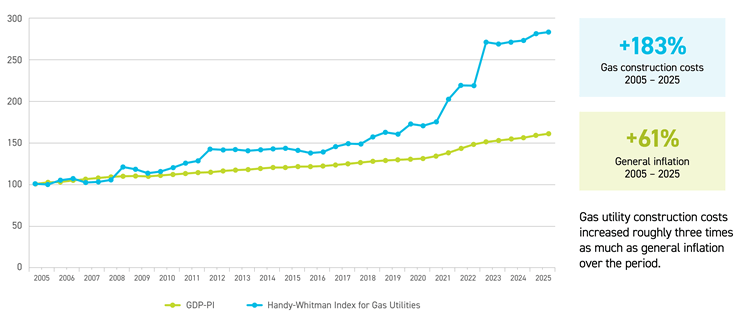
In addition to inflation, required city fees are escalating substantially.
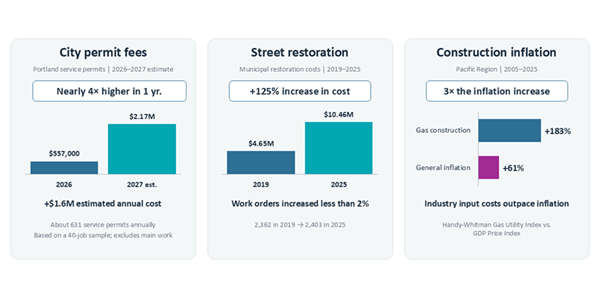
*Illustrative cost drivers—not additive. Figures approximate; 2027 permit costs are estimated under Portland's new fee structure.
What is the value of natural gas service?
What is the value of natural gas service?
NW Natural strives every day to provide safe, reliable service in the most affordable way we can. But there’s also an efficiency benefit. We’re proud of the fact that our system is delivering more energy over a year than any other utility – gas or electric, but we’re using less natural gas overall.[3]Per data from the Oregon Public Utility Commission, 2023 Oregon Utility Statistics Book. In fact, gas used in Oregon to serve more residential and commercial customers in the state is nearly flat over 25 years, compared to where it’s grown by 128%, which is gas used by electric utilities to generate power.
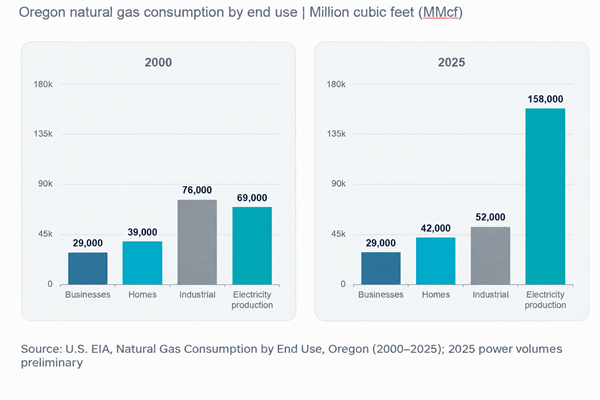
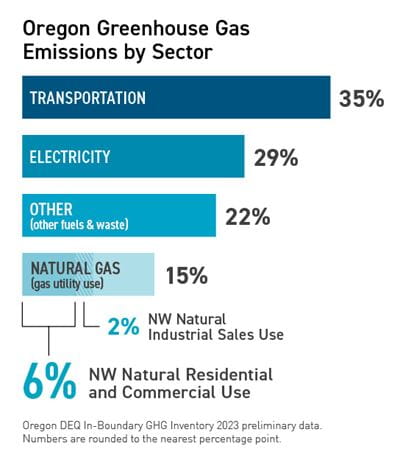
This efficiency helps on the environmental from, as well. According to the Oregon Department of Environmental Quality, NW Natural residential and commercial customers’ gas use is among the lowest emitting by sector in the state.